
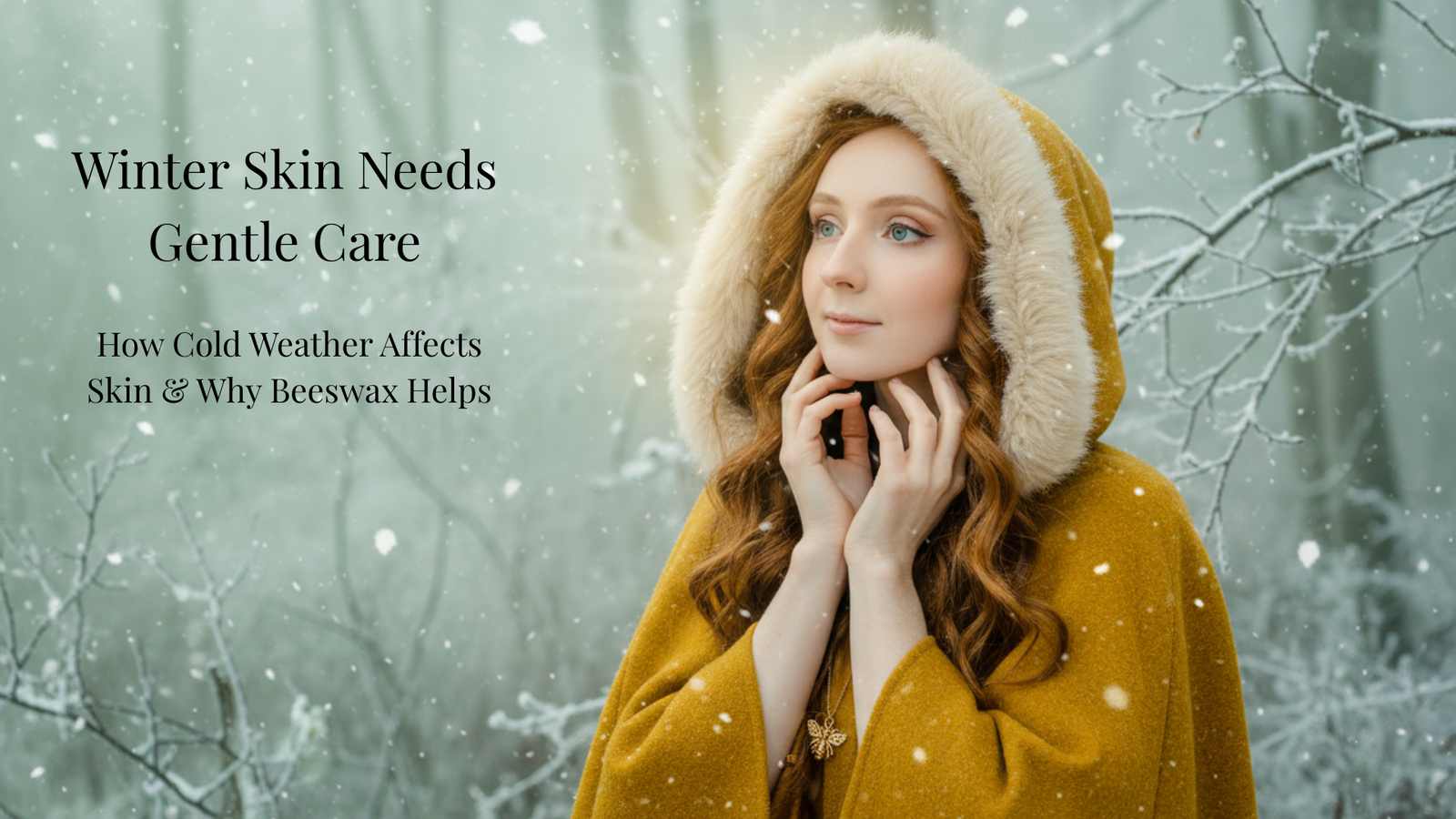
Cold Snap Skincare: Why Winter Wrecks Your Skin (and How Beeswax Balms Can Help)
As the UK heads into a proper cold snap, a lot of people suddenly realise their skin feels tight, itchy, and papery. Hands sting after washing, shins look like lizard scales, and faces that were fine in September are now red and reactive.
You’re not imagining it. Winter is one of the toughest seasons for our skin – and there’s good UK data to back that up. The good news is that a few smart changes (and the right balm) can make a huge difference.
In this blog we’ll look at:
- What cold weather and central heating actually do to your skin
- Why dry skin and conditions like eczema often flare in winter
- How beeswax-based balms can support your skin barrier
- How to use The Bee Fairy Skin Rejuvenation Balm and Gardeners’ Hand Balm to keep your skin comfortable from head to toe
What Winter Does to Your Skin
Cold air + low humidity = thirsty skin
Cold air holds less moisture than warm air. In winter, outdoor humidity drops, and then we step inside into centrally heated rooms that are often even drier. Studies show that low humidity and low temperatures weaken the skin barrier and increase transepidermal water loss (TEWL) – the amount of water escaping through the skin.UpCircle Beauty
When the barrier is compromised, skin:
- Loses water more quickly
- Feels tight, rough or itchy
- Becomes more sensitive to soaps, fragrances and hot water
Central heating dries the air even more
The NHS notes that cold weather and central heating are common causes of dry skin, along with long hot baths and harsh soaps.NHS Shropshire, Telford and Wrekin Indoor heating can push relative humidity down to levels similar to a long-haul flight – not ideal for happy skin.
Wind and sudden temperature changes
Jumping from a freezing pavement into a warm shop, or from a hot shower into a chilly bathroom, makes blood vessels in the skin expand and contract quickly. Over time that can contribute to:
- Redness and flushing
- Chapped lips and cheeks
- Sore, cracked hands
Winter and Skin Conditions in the UK
Dry, sensitive skin is common in the UK, and winter often makes it worse.
- Eczema (atopic dermatitis) affects around 1 in 5 children and 1 in 10 adults.The Sun
- NHS and dermatology sources note that cold weather, low humidity and central heating are frequent triggers for flare-ups of dry, itchy skin.nhs.uk+1
If you live with conditions such as eczema or contact dermatitis, you may notice:
- More itching and dryness in winter
- Rough, scaly patches on hands, arms and legs
- Cracks around knuckles and fingertips after washing
Emollients and gentle skincare are a cornerstone of managing dry, sensitive skin – and that’s where beeswax balms can really shine. (Always follow your GP or dermatologist’s advice for diagnosed skin conditions; what follows is general skincare support, not medical treatment.)
Why Beeswax Balms Are Winter Heroes
Beeswax has been used on skin for centuries, and modern research helps explain why it works so well.
A breathable, protective barrier
Beeswax forms a thin, breathable film on the skin. This helps:
- Reduce water loss (TEWL)
- Shield skin from cold air, wind and frequent washing
- Keep irritants (like detergents and soil) away from fragile skin
Unlike petroleum jelly, beeswax-based balms can feel less greasy and more “grippy” on the skin, especially when blended with plant oils and butters.
Locking in moisture – not just adding it
Humectants (like glycerin) draw water into the skin. Occlusives (like beeswax) keep that water there. Applied after a bath, shower or hand-washing – when skin is still slightly damp – a beeswax balm helps trap that moisture so your skin stays comfortable for longer.
Naturally rich textures
When you combine beeswax with plant oils and butters, you get:
- A rich, cushioning texture that softens rough patches
- Nourishing fatty acids that support the skin’s lipid barrier
- A finish that’s ideal for elbows, shins, hands and any areas that spend a lot of time exposed to the elements
Whole-Body Comfort: The Bee Fairy Skin Rejuvenation Balm
If you could only pick one winter skin multitasker, this would be it.
What it’s for
The Skin Rejuvenation Balm is designed as an all-round, whole-body balm to:
- Soothe dry, tight-feeling skin on face and body
- Soften rough areas (elbows, knees, heels, shins)
- Support the skin barrier after bathing or showering
- Give a gentle, comforting glow to weather-worn skin
Because it’s beeswax-based and enriched with natural oils, it’s particularly helpful when:
- Central heating is on all day
- Your cheeks feel tight after being outside
- Your lower legs look dull, flaky or “chalky” in the cold
How to use it
Face & neck
- Gently cleanse with a mild, fragrance-light cleanser.
- If you like, apply your usual hydrating serum or light cream.
- Warm a pea-sized amount of Skin Rejuvenation Balm between your fingers and press it over cheeks, nose, chin and neck.
Body
- After a bath or shower, lightly towel-dry so skin is still slightly damp.
- Massage balm into shins, knees, elbows, décolleté or any area that feels dry.
- A tiny amount goes a long way – you’re aiming for a soft sheen, not a thick layer.
Hard-Working Hands: The Bee Fairy Gardeners’ Hand Balm
Winter is especially cruel to hands. Frequent washing, cold air and handling cold, wet things (hello, dog leads, garden tools and shopping trolleys) strip away natural oils.
The Gardeners’ Hand Balm was created for people whose hands work – not just gardeners, but:
- Dog walkers
- Market traders
- Crafters and makers
- Anyone washing their hands all day
Why it suits winter hands
With its beeswax base and rich natural oils, Gardeners’ Hand Balm is ideal to:
- Form a protective, water-resistant layer over the skin
- Soften rough knuckles and dry cuticles
- Help hands feel comfortable again after exposure to soil, detergents and cold air
How to use it
Daytime barrier
- After washing and gently drying your hands, massage a small amount into backs of hands, fingers and around the nails.
- Reapply before going outside, especially if it’s windy or you’re handling cold, wet items.
Overnight recovery
- In the evening, apply a slightly thicker layer.
- For an extra treat, slip on a pair of cotton gloves while you sleep – you’ll wake up to noticeably softer hands.
Arms & forearms
- If your forearms get dry, red or “itchy-tight” from cold air or central heating, smooth a little balm from wrist to elbow after washing.
A Simple Bee Fairy Winter Skin Routine
Here’s a quick routine you can follow during the cold snap:
Morning
- Short, warm (not hot) shower – the NHS advises avoiding very hot baths and showers to reduce dry skin.NHS Shropshire, Telford and Wrekin
- Gentle cleanser only where needed – avoid harsh soaps and heavy fragrances.
- Skin Rejuvenation Balm on face, neck and any body areas that feel dry.
- Gardeners’ Hand Balm after your first hand wash of the day and before heading out.
- Gloves & layers when you go outside to protect hands and arms from windburn.
Evening
- Cleanse skin gently – avoid over-scrubbing or strong exfoliants in very cold weather.
- Apply Skin Rejuvenation Balm to cheeks, lips and any “problem patches” (shins, elbows, heels).
- Massage Gardeners’ Hand Balm into hands, cuticles and forearms; pop on cotton gloves if your hands are particularly sore or rough.
Extra Winter Tips Backed by UK Advice
Alongside your balms, a few lifestyle tweaks can really help:
- Moisturise often. NHS guidance puts regular emollient use at the centre of managing dry skin and eczema.nhs.uk
- Keep showers brief and warm, not hot. Hot water strips your natural oils faster.NHS Shropshire, Telford and Wrekin
- Use gentle, fragrance-light products. Harsh detergents and strong fragrances can irritate dry, winter-stressed skin.
- Add a bit of humidity. A bowl of water near a radiator or a few houseplants can gently lift indoor humidity, which your skin will appreciate.
- Wear gloves for wet work. Washing up, cleaning or outdoor chores are easier on your hands if you keep them covered.
- See your GP or dermatologist if you have persistent redness, cracking, infection or an existing skin condition that isn’t controlled – skincare alone isn’t a substitute for medical advice.
Leave a Reply