Every spring and summer, millions of people across the UK experience the familiar symptoms of hay fever — sneezing, itchy eyes, blocked noses and irritated skin.
For many, the usual approach involves antihistamines, nasal sprays and medicated treatments. While these can help some people, one thing I often hear when speaking to people at markets and events is that over time they feel they need to use more of these treatments or find they become less effective.
This observation has led many people to start exploring natural hay fever support alongside traditional treatments.
Most medicines are manufactured so that every batch is identical, meaning the body experiences exactly the same compounds each time.
Nature rarely works that way.
Honey varies depending on the flowers the bees visit. Beeswax varies depending on nectar and pollen collected by the hive. Even plants growing in the same place can differ slightly depending on soil, sunshine and rainfall.
In nature, nothing is ever completely identical.
This is simply a personal observation and theory — but it does make many people curious about whether natural approaches might sometimes work differently with the body.
While there is no single solution to hay fever, many people are exploring simple natural habits that may help make the season a little easier.
Three ideas often come up in conversation:
🍯 local honey
🐝 barrier balms
🕯 beeswax candles
Local Honey and Hay Fever
One of the most commonly discussed natural approaches to hay fever is local honey.
Over the years I have met many people who absolutely swear by taking a spoonful of local honey each day. Quite a few say they feel it helps them during hay fever season.
Interestingly, those who report the greatest benefit often say they start taking honey well before the pollen season begins, sometimes from early autumn and continuing through winter and spring — or even all year round.
At present there is no clear scientific evidence confirming that local honey directly helps with hay fever, and experiences naturally vary from person to person.
However, it does raise an interesting question.
Local honey contains tiny traces of pollen gathered by bees from the surrounding countryside. It also contains a wide range of natural plant compounds and enzymes produced by the bees themselves.
Some people wonder whether these natural components might interact with the human immune system in ways we do not yet fully understand.
Of course this remains speculation, but it may help explain why so many people enjoy including local honey as part of their daily routine.
At the very least, a spoonful of good local honey is a simple natural pleasure — one that has been valued for centuries.
Creating a Barrier Against Pollen
Another simple idea gaining attention during hay fever season is reducing the amount of pollen that enters the nose and eyes in the first place.
Pollen grains are tiny airborne particles released by plants during flowering. When inhaled or when they come into contact with the eyes, they can trigger the immune response responsible for hay fever symptoms.
The body already has natural defences.
For example, nasal hairs act as a natural filter, helping trap dust and pollen particles before they travel deeper into the respiratory system.
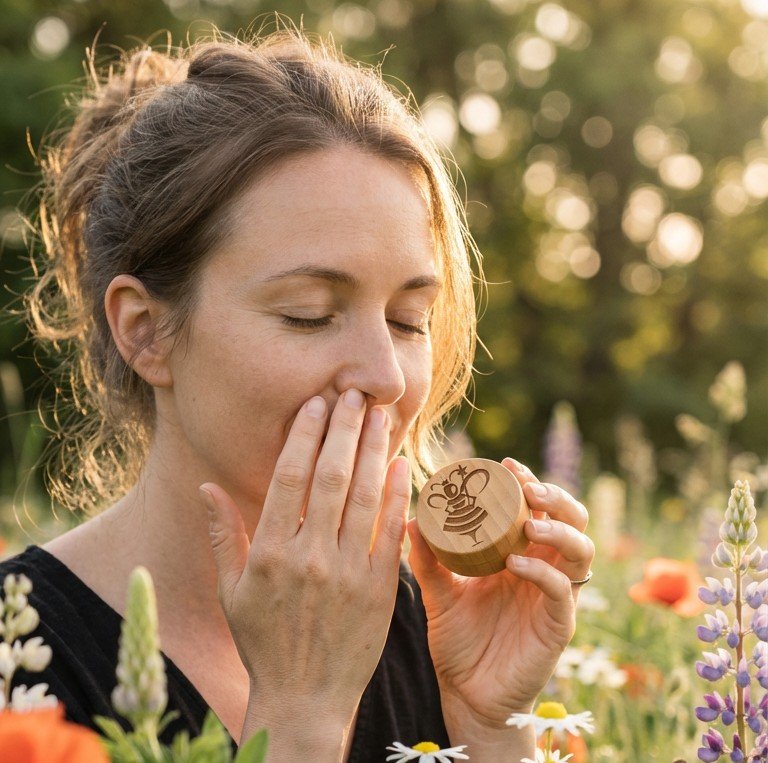
Because of this, some hay fever advice suggests applying a small amount of balm around the nostrils to help trap pollen particles before they are inhaled.
This approach does not treat hay fever but simply aims to reduce the amount of pollen entering sensitive areas.
A beeswax barrier balm works well for this idea because beeswax naturally forms a light protective layer on the skin.
Applied gently around the nostrils and surrounding areas, it may help:
• trap pollen particles before they enter the nose
• protect delicate skin from constant nose wiping
• soothe irritation during high pollen periods
How People Often Apply a Barrier Balm
Over time many customers have shared the ways they find most helpful to apply a barrier balm during hay fever season.
The most common method is to apply a small amount around the nostrils to create a light protective barrier where pollen is most likely to enter the nose.
Another tip people often share is applying the balm in a gentle figure-of-eight pattern around the eyes.
This usually involves lightly applying the balm:
• across the bridge of the nose
• under each eye
• around the outer eye area
For people who wear glasses, this can sometimes help create a light barrier in the areas where pollen may settle around the frames and eye area.
The balm can also help protect the delicate skin around the nose and eyes, which can become sore during hay fever season due to frequent wiping or rubbing.
As always, the balm should be applied externally and with care, avoiding direct contact with the eyes.
At The Bee Fairy, our Hay Fever Barrier Balm is made using natural beeswax and botanical oils designed to protect and soothe the delicate skin around the nose and eyes during pollen season.
It is not a medicine and is not intended to treat hay fever, but many people enjoy using it as part of their daily routine during the months when pollen levels are high.
Choosing the Right Kind of Barrier
Some hay fever advice suggests applying petroleum jelly around the nostrils as a pollen barrier.
While many people use it without issue, some health professionals advise caution when using petroleum-based products around the nose for long periods.
Petroleum jelly is an oil-based substance and if tiny amounts are repeatedly inhaled over time it may potentially accumulate in the lungs. In rare cases this has been associated with a condition known as lipid pneumonia.
Although uncommon, this is one reason some people prefer to avoid petroleum-based products around the nostrils on a regular basis.
Natural waxes such as beeswax behave differently, forming a protective layer on the skin rather than remaining as an oily substance that could be inhaled.
For many people, beeswax-based balms provide a simple and natural alternative when creating a physical barrier during pollen season.
Beeswax Candles and the Air We Breathe
During hay fever season many people become more sensitive to what is in the air around them — not only outdoors, but inside the home as well.
Some candles are made from paraffin wax, a petroleum by-product, and when burned they can release soot and synthetic fragrance compounds into the air.
For people already dealing with irritated airways, this is something they may prefer to avoid.
Beeswax candles offer a natural alternative.
Made from wax produced by honeybees, they have been used for centuries and are valued for their clean, gentle burn and subtle honey aroma.
Many people enjoy lighting beeswax candles during periods of high pollen because they create a calm and natural atmosphere indoors without the strong artificial scents found in some fragranced candles.
While they are not a treatment for hay fever, keeping the air inside the home as natural and irritation-free as possible can sometimes make the season feel more comfortable.
Watching Pollen Levels During Hay Fever Season
Pollen levels can change dramatically depending on the weather and time of year. Warm, dry and breezy days often bring the highest pollen counts, while rain can temporarily clear pollen from the air.
Many people who experience hay fever find it helpful to keep an eye on daily pollen forecasts so they can plan outdoor activities and take simple precautions when levels are high.
During these periods, small steps such as washing pollen from skin and hair, applying a gentle barrier balm around the nose and eyes, and keeping indoor air calm and natural can sometimes make the season a little easier.
A Natural Approach to Hay Fever Season
Everyone experiences hay fever differently and there is no single solution that works for everyone.
But many people find that combining a few small natural habits during pollen season can help make the months more manageable.
These might include:
• taking a spoonful of local honey
• applying a natural barrier balm around the nose and eyes
• keeping indoor air calm and natural with beeswax candles
• washing pollen from skin and hair after spending time outdoors
Sometimes the simplest ideas can make the biggest difference.
✨ Made especially for you with help from Mother Nature and a sprinkle of Magic from The Bee Fairy.
💛🐝🧚♀️
Leave a Reply